
"We Cannot Fight This Alone": The Global Demand for a Coalition Against Technology-Facilitated Gender-Based Violence
Technology-facilitated gender-based violence is rapidly escalating – and when we consulted grassroots women’s rights organisations from around the world about its impact, the message was clear: a global PREVENT coalition is urgently needed.
When The Lotus Flower travelled to the Women Deliver conference in Melbourne, Australia, we arrived with one pressing question: what will it really take to protect women and girls from technology-facilitated gender-based violence (TFGBV)?
We were at the event to push for a global alliance that we call PREVENT – Protection, Response & Elimination of Violence Enabled by New Technologies. The coalition is designed to give women’s rights organisations a central hub where they can pool data, share insight and resources and speak with one collective voice.
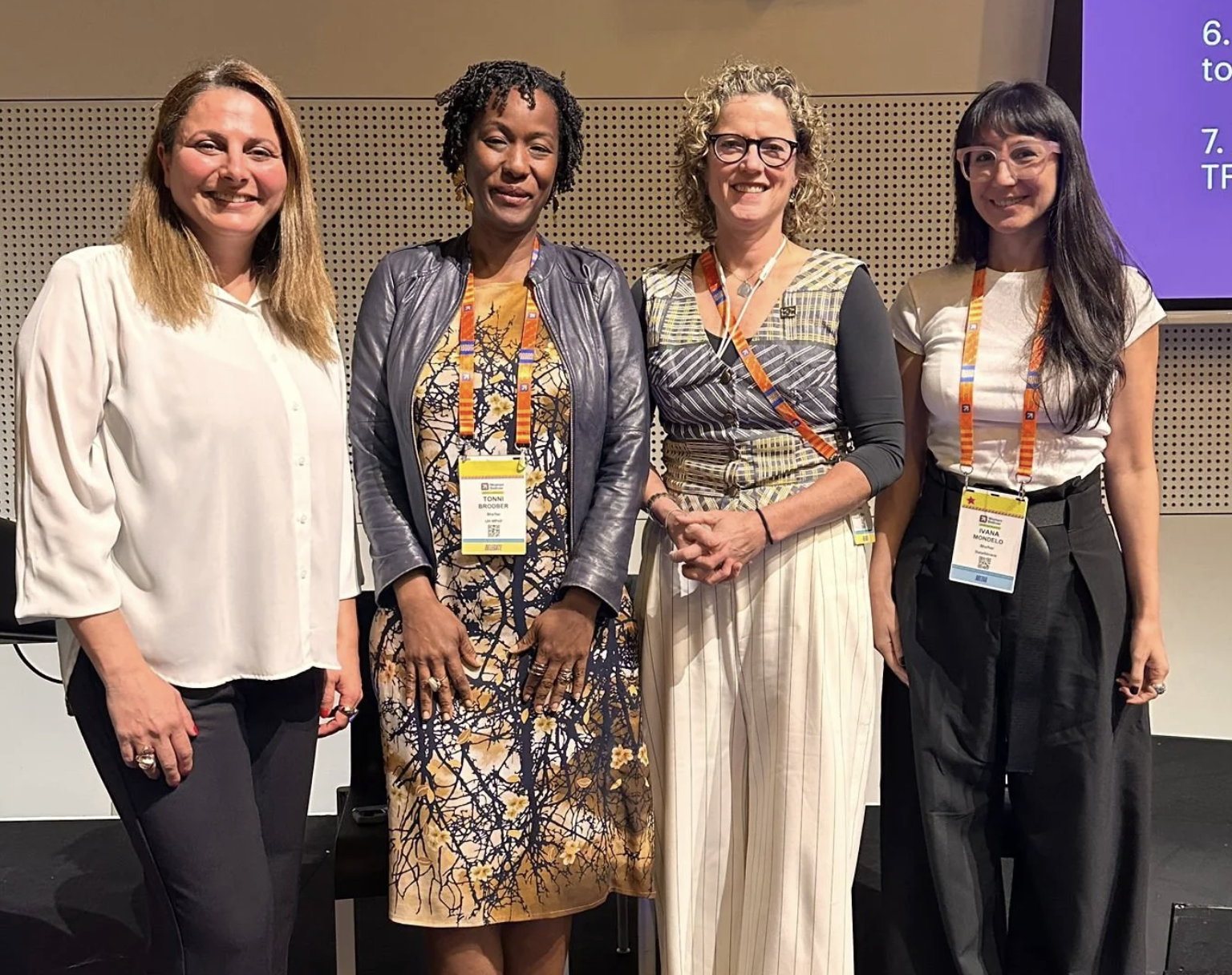
At the conference, Taban hosted an eye-opening panel discussion with Tonni Brodber, Head of Secretariat of the Women’s Peace and Humanitarian Fund; Patty Kinnersly, CEO of OurWatch; and Ivana Mondelo, Strategic Communications Coordinator at DataGénero. Together, they explored how TFGBV is accelerating faster than governments can regulate or platforms can be held accountable, and what this means for women’s rights organisations dealing with rising harm on the frontline.
A Borderless Crisis
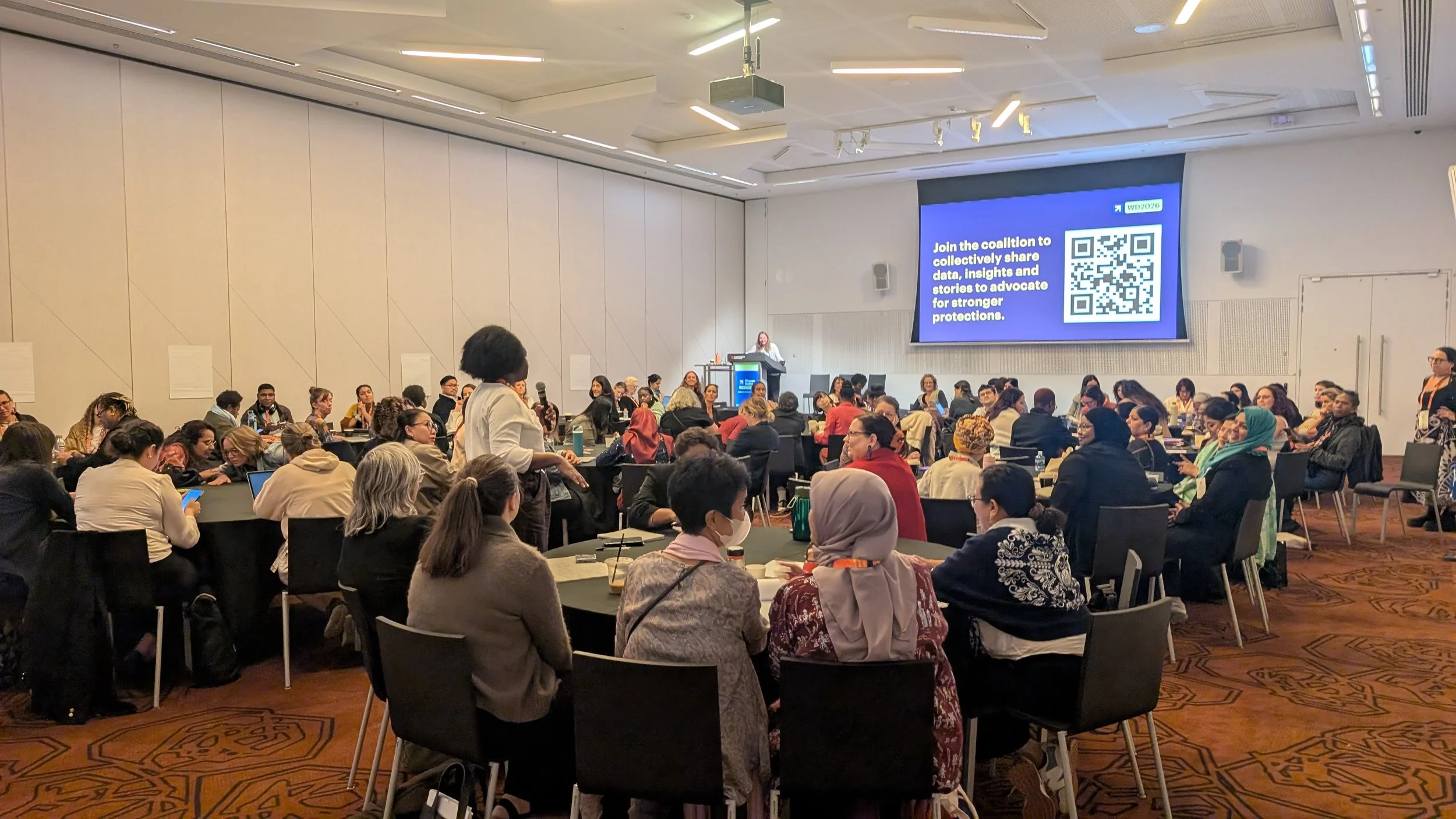
As part of the conversation, we asked the women in the room to describe what TFGBV looks like in their communities. There were several common themes:
The Rise of AI and Deepfakes
Across almost every context, AI-generated harm was cited as the most prevalent new threat. Concerns included Nudify apps, deepfake abuse circulating in high schools and rising AI-generated violence targeting women in leadership and LGBTIQ+ communities. Advocates working on consent education said AI deepfake pornography and sextortion are now central to their casework, and they expressed particular alarm at the normalisation of location-tracking tools. One participant questioned why so many young people don’t recognise these technologies as instruments of surveillance and control.
Organisations based in Hong Kong described image-based sexual violence as the most urgent TFGBV issue, including upskirting and the non-consensual sharing of intimate images. Concerns were also raised about AI-generated content that circulates on illegal platforms which profit freely while victims receive almost no support from authorities. In response to the government’s failure to act, local civil society groups have set up their own image take-down services.
"The language of the internet itself is becoming sexist and transphobic – and this is even worse through an intersectional lens” – Participant
2. Compounding Vulnerabilities for Marginalised Groups
Some communities face multiple, layered risks. In New Zealand, advocates working with migrant and refugee communities said many clients are only just beginning to name TFGBV as a form of harm. In Thailand, participants highlighted the exposure of Indigenous communities, where limited digital literacy, poor school regulation and the targeting of feminist and LGBTIQ+ activists compound the threat. In Australia, researchers pointed to the intersection of misogyny, lateral violence and racism in Aboriginal communities.
One of the most striking contributions came from a representative working in humanitarian contexts who reframed the conversation entirely: in many conflict-affected settings, men – including husbands and brothers – control the phone. TFGBV does not even require the victim to be online. The digital divide itself is a form of control.
TFGBV has also entered the workplace. In Australia, healthcare workers described being sexually harassed online by patients and their families: a form of abuse that is still largely absent from policy discussions.
"We need an organised transnational response to the organised, transnational authoritarian movement that is weaponising gender and using TFGBV as a central organising mechanism” – Participant
3. TFGBV as a Political Weapon
Some of the most urgent warnings came from democracy advocates, who described TFGBV as a deliberate strategy used by authoritarian movements to silence women in public life, drive them from digital spaces and weaken their democratic participation. Those working on electoral integrity in Latin America described coordinated technology-facilitated attacks during election campaigns, while street-level gender justice activists reported relentless online harassment, cyber-stalking and doxxing as a result of simply doing their work.
The Gaps We Must Bridge
While at the conference, we asked participants about the biggest gaps faced by their organisations in responding to TFGBV. These were the recurring themes:
No Shared Data or Evidence Base
This was the most frequently cited gap. Organisations are working without the evidence needed to understand the scale of harm, persuade funders or governments or learn from peers. Participants from London, the Middle East and across Asia all named data scarcity as a major barrier too.
No Collective Voice or Advocacy Infrastructure
Many organisations are working in isolation, without the coordinated pressure needed to move platforms, governments and lawmakers into action. Participants from nations including Ghana and Indonesia named the absence of coalition-building as a critical gap, making it difficult to push for recognition, regulation or criminalisation of TFGBV.
Technology Platforms Not Held Accountable
Participants described platform impunity as a defining failure. Companies continue to profit from the infrastructure that enables TFGBV, while victims have little recourse. Frontline workers and activists remain largely excluded from conversations about protective solutions.
Government Inaction and Lagging Legal Frameworks
Across almost every context, laws are trailing dangerously behind technology and day-to-day realities. In multiple countries, participants named the rise of extreme-right men’s political groups as an active force blocking regulation.
Funding Scarcity at Grassroots
Most organisations said they are tackling this work with almost zero resources. Participants from Ghana said TFGBV is taking young women’s lives and that there is no funding to respond. Pacific communities are only just beginning to recognise the scale of the problem, with little in place to address it. Groups across Hong Kong, Africa and the Americas all named funding as a first need.
When asked what a global coalition could offer, the organisations identified six clear priorities:
Shared Data Repository A shared evidence base of case studies, impact data and cross-border findings, giving organisations the material they need to make the case to funders, governments and platforms.
Collective Advocacy Engine Coordinated campaigns targeting tech companies and governments, turning evidence from dozens of organisations into pressure that cannot be ignored.
Global Community of Practice A space to share strategies, tools and hard-won lessons across borders, so no organisation has to solve alone what others have already encountered.
Capacity Building and Resources Practical training, toolkits and resource mobilisation to strengthen frontline organisations in low-resource settings and protect the activists leading this work.
Funding Access and Visibility Amplifying grassroots voices, establishing joint funding pathways and stronger routes for resources to reach those closest to the problem.
Frontline Safety Support Filling a critical blind spot by developing and sharing protective strategies to keep frontline workers and activists safe online, rather than only responding once harm has already occurred.
"We are looking for shared experiences, lessons from different angles, joined-up advocacy, and funding opportunities” – Participant
We look forward to sharing further updates soon as we build out the PREVENT Community of Practice…