
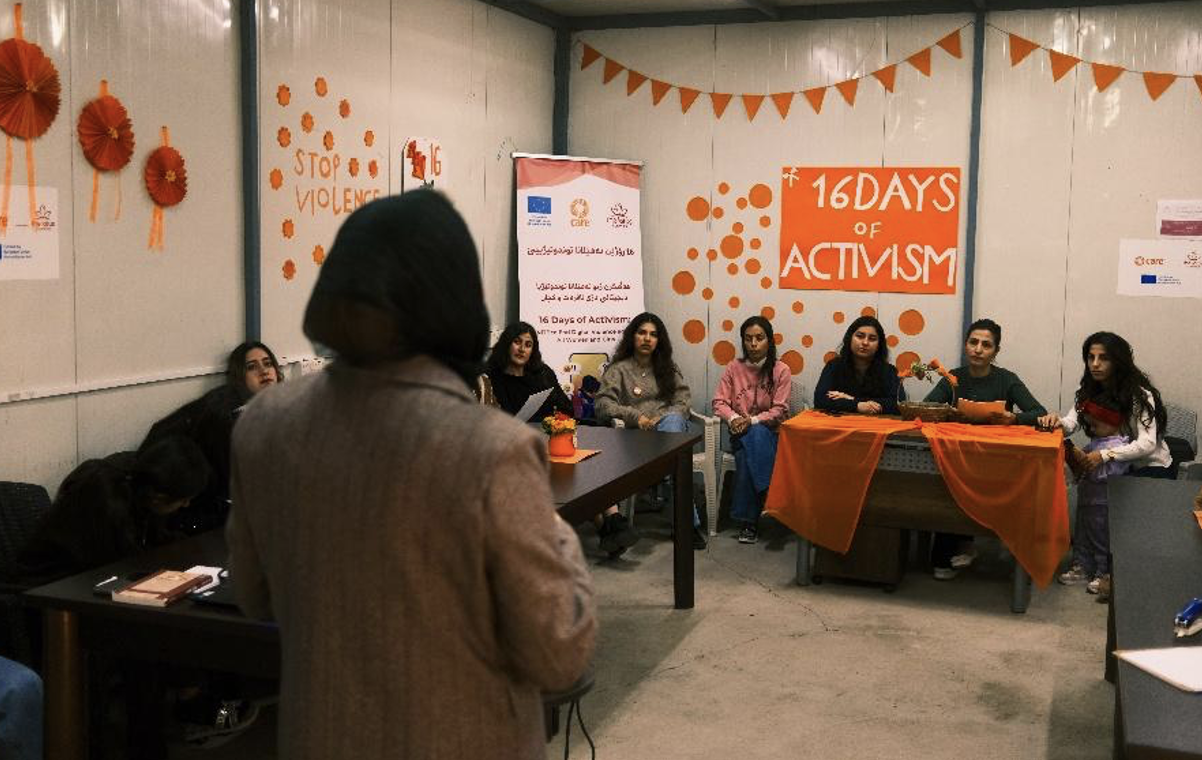
In a small room at The Lotus Flower’s women’s centre in Duhok, four women sit together and begin to share their stories. Here, in a space built around safety and trust, they can open up about the depression, anxiety and grief they have suffered since 2014, when ISIS attacked their villages in Sinjar, northern Iraq, and forced them to flee their homes.
All four women live in Rwanga IDP camp, a tented settlement in Zakho Independent Administration of Duhok Governorate. Although attitudes are slowly changing, the stigma around mental health makes it difficult for them to ask for help. “My husband's sisters were telling me, ‘this is for dull people or the crazy ones,’” says Gule, 25.
She recalls witnessing her maternal uncle being killed in front of her, an experience so overwhelming that she blacked out. “What I have seen, few others have seen,” Gule whispers.
Her words hang in the air. Soon after this, Gule says “the anger appeared” and she began experiencing PTSD episodes which not only affected her, but her whole family. Eventually, she turned to The Lotus Flower for support.
A Shared Pain
Speaking about 2014 is still visibly painful for everyone in the room. Fatima, 33, describes the morning ISIS attacked Sinjar. “It started at 2am… then at 7am, we got evacuated,” she says. But her father was unable to escape. “They handcuffed him, and then with a rope, just grabbed him. The car was moving, and then…”
Her voice falters, and tears start to fall.
Gule and Fatima’s stories echo those of thousands of Yazidi families uprooted by ISIS, many of whom remain displaced more than a decade later. Yet within this circle, the women are not merely recounting what happened to them. They are gradually rebuilding. Reclaiming their voices, their wellbeing and their futures.
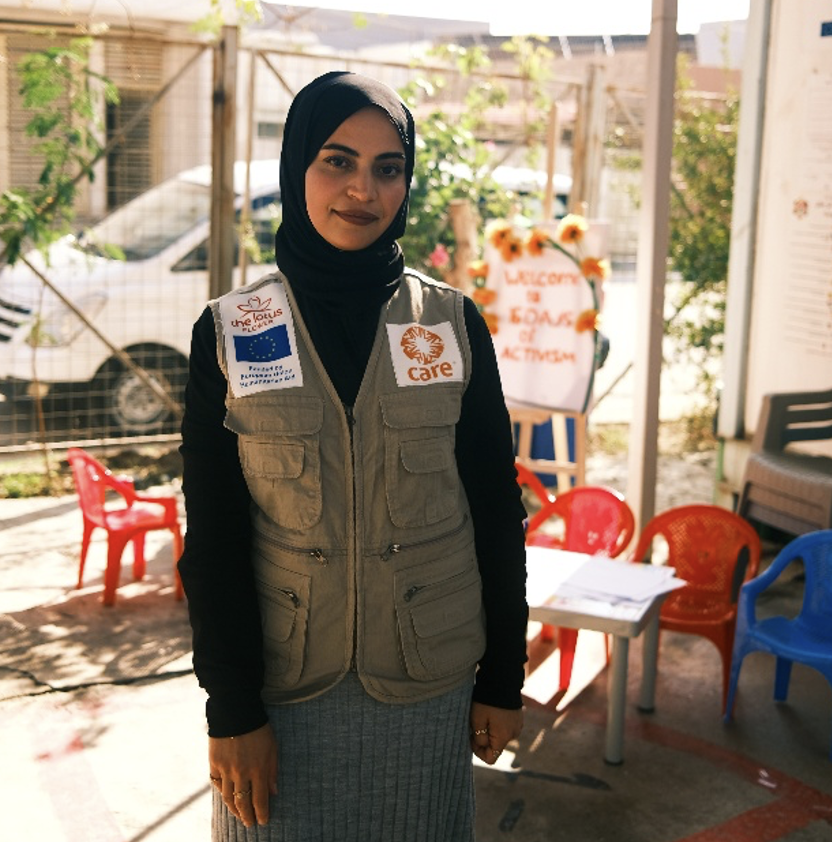
Sitting on a bench outside, Hozan, a gender-based violence (GBV) caseworker, explains how The Lotus Flower’s support covers everything from psychological care to legal assistance.
Crucially, she says each aspect is led by the women themselves. “We don’t take any step without their consent.”
On one occasion, a girl came to the centre asking to speak to a GBV caseworker. “She was very nervous and hesitant,” Hozan recalls. “I was the first one she was telling her story to.”
Of course, the first priority is immediate safety. Then in their first session, Hozan focused on emotional support and psychological grounding techniques, while building a rapport and devising a case plan for longer-term support.
“I want her to come out from her world because she is in a small and dark place, where she doesn’t trust or want to see any people. I want her to change her way of thinking about life.”
Like many of those who work in the camps, the team must do more with far less as humanitarian funding shrinks. Yet Hozan’s commitment to helping women find a path forward and rebuild their confidence is unwavering. “I want to support people, to open doors for them, to show them a way out of the situations they are in.”
The Weight of Grief
If one woman knows what it’s like to rebuild after a crisis, it is Ahlam.
A mother of seven, Ahlam, 30, fled Sinjar in 2014. With the lights flickering as the power cuts out in the small room, she remembers fleeing ISIS. “Fear and hunger in the middle of summer,” she says, clasping her hands tightly in her lap. “We escaped to Mount Sinjar and spent seven nights there.”
She pauses, and her voice thins. “I lost one of my sons, because there was no water. He was so thirsty that he lost his life.”
Ahlam takes a deep breath. Though she eventually reached Shariya camp in Duhok with her husband and six surviving children, safety was still out of reach. She began experiencing gender-based violence and abuse from her husband, and her own trauma began to show itself in sudden bursts of domestic violence at home.
“I would express the violence and anger that was used against me towards my children. Within a few moments, I would regret what I did.”
That cycle prompted Ahlam to seek help and in May 2025, she began sessions with a psychologist at The Lotus Flower centre. “I feel a lot better,” she says more confidently. “My condition is better and also that of my family.”
New Beginnings
For many survivors, the barriers to rebuilding are immense. Hidar, a Lotus Flower employee, explains that many “have lost everything, including legal identity cards.” Through the organisation’s ‘cash for protection’ scheme, Ahlam was able to obtain an ID, making it easier for her to access government services.
That opened another door, and she bought a simple sewing machine – both as a distraction and a way to earn money by starting her own small business. For the first time in our conversation, she smiles broadly. Asked about her hopes for the future, she says supporting herself and her family financially is her biggest goal. Her sewing machine has allowed that dream to commence.
But the hurdles are still steep. Ahlam cannot yet afford more advanced equipment, meaning customers with complex orders go elsewhere. Her husband earns just $100 a month. “It’s the third day that my children don’t have a penny,” she says, looking down at her hands, tightly clenched once again.
Though her path to independence is still long, her progress is real – and her determination shows how The Lotus Flower is helping women move from survival towards something more stable.
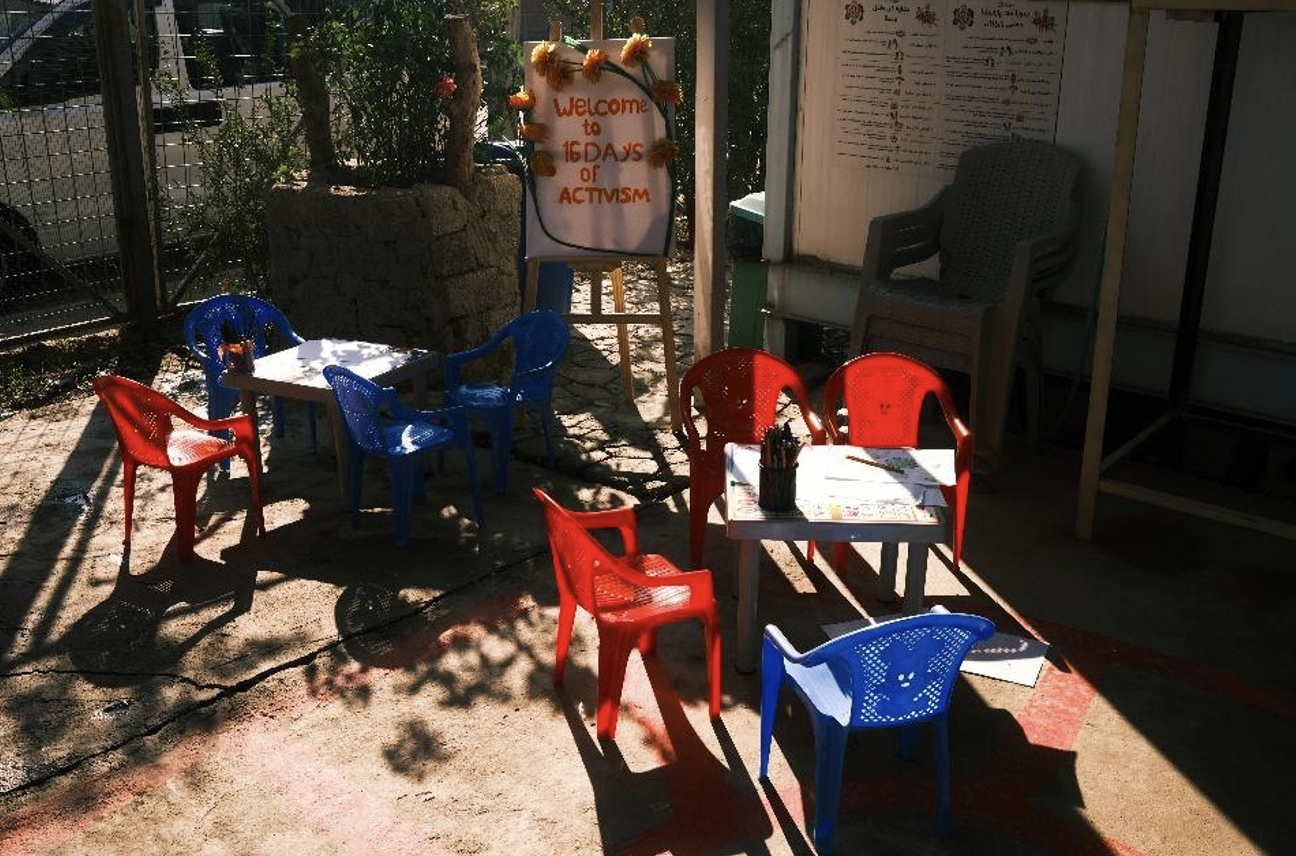
The centre hums with life all day. As children play outside, a cyber-safety session runs in one room, and group therapy resumes in another. The Lotus Flower continues to offer women practical, emotional and psychological support here and in camps across Duhok as they piece their lives back together.
The challenges remain immense, but their stories are a powerful testament to resilience, and a reminder that even after such upheaval, hope endures.
Contributors: Alex Raison, Thomas Noonan and Mihir Melwani