
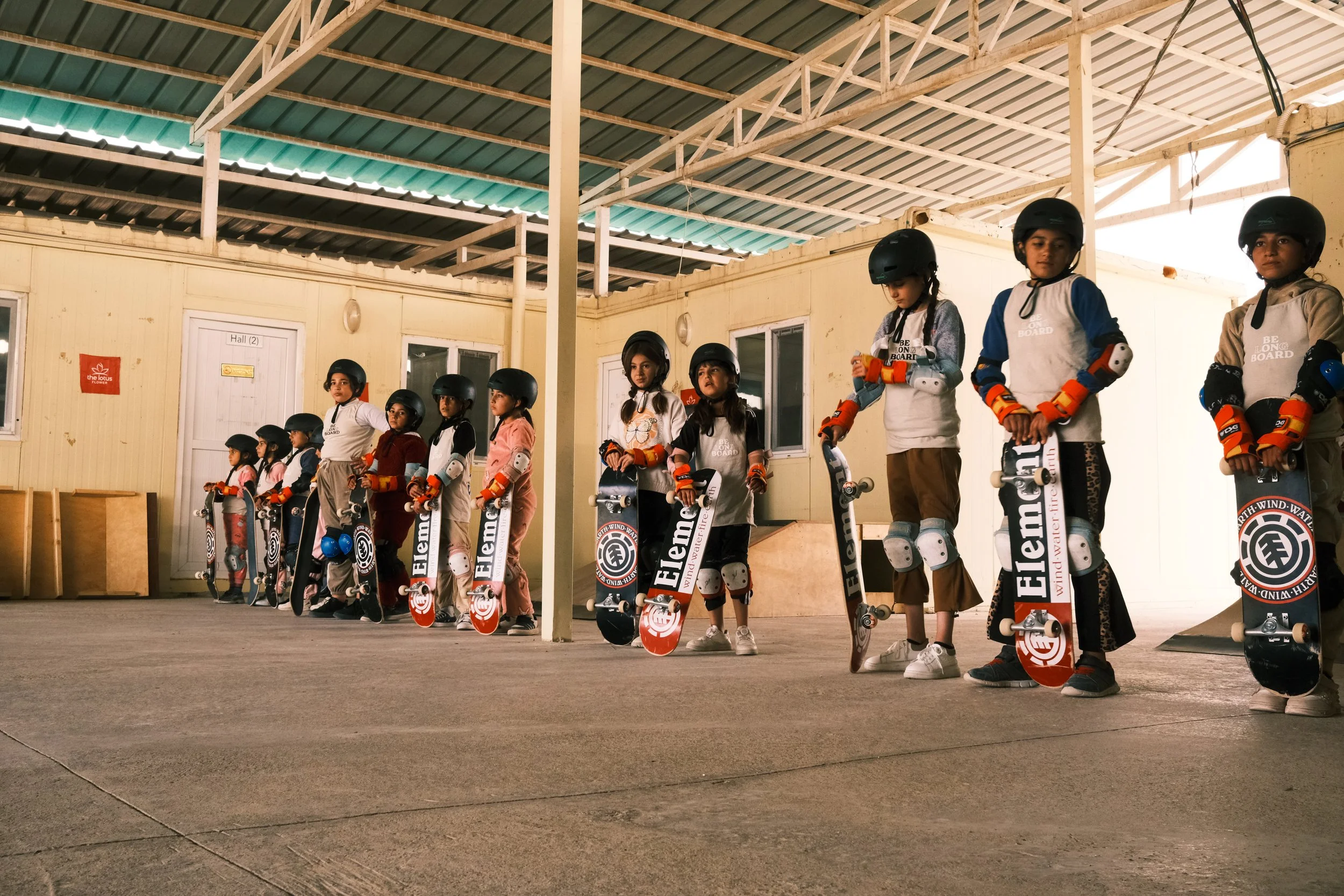
Loreen sits in an armchair, reflecting on her growing waiting list. Her worried gaze contrasts with the sound of girls laughing outside; music blaring, wheels scraping across concrete as they take part in the Lotus Flower’s popular skating programme.
Inside the room, the mood is heavier. “I don’t know what to do because I don’t have any service provider to refer them to,” she says.
As one of the only psychologists working in the camps in Duhok, Loreen can take just 15 one-to-one cases at a time. Around her, the system that once supported her work is slowly collapsing, with other NGOs closing and the wait for services consequently soaring.
Where she can, Loreen offers group sessions as a stopgap, stretching every available resource. “If they need anything else, we will try and do it for them,” she says. “But the funding… we don’t have it.”
When support disappears overnight
The pressure Loreen is facing is not an isolated challenge. It is the direct result of rapid and ongoing cuts in funding for international aid in the region.
Cuts began primarily in 2020, with the UK slashing its humanitarian budget by just over half in 2021. Then came the demise of USAID, which was combined with a sharp acceleration of cuts from the UK, EU and others in 2025. By June last year, the UN reported that there has been a 40% year-on-year reduction in aid funding.
As a result, NGOs have been forced to axe services overnight, withdrawing support without warning from the communities who rely on it. This means empty classrooms, abandoned protection programmes and families left without essential services; all undermining the progress that has been made in recent years.
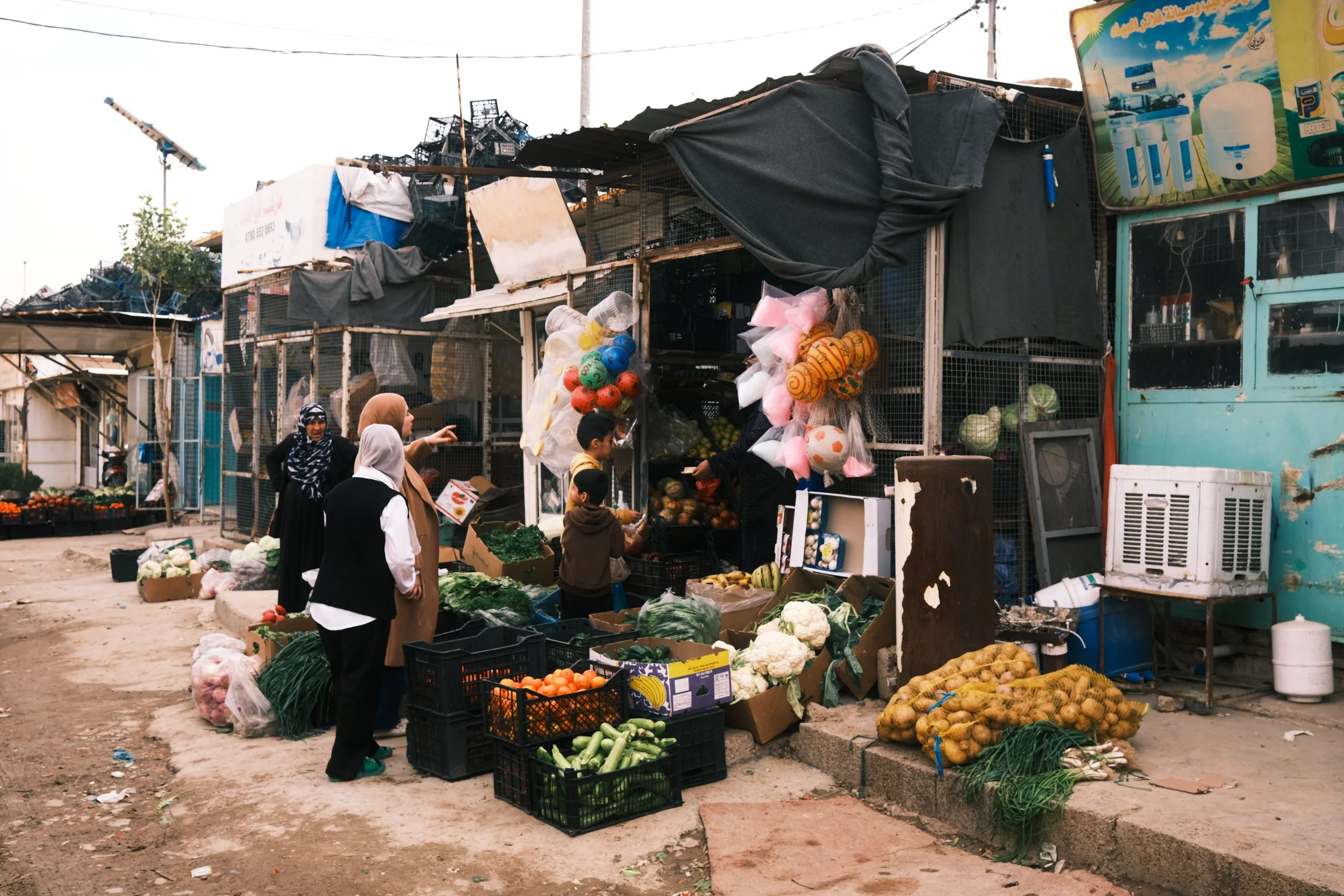
Across Duhok, more than 94,000 displaced people are living in formal camps, according to UNHCR. Many have already endured years of conflict, displacement and instability. Now, many are without adequate food, water or protection.
The impact has been stark, with people increasingly experiencing trauma, abuse and a sense of isolation.
One of Loreen’s patients, a mother, had been receiving counselling from another NGO. When that organisation was forced to close, her care ended without warning.
“She couldn’t feed her children… she tried to commit suicide,” Loreen says. “She was used to that support, and then it was gone. Just like that.”
This is the reality of aid cuts: not a gradual withdrawal, but an abrupt severing of lifelines.
Basic services are also faltering. “Even the water here. If it comes one day, it will cut for three days,” she says.
The last NGOs standing
With organisations ceasing or reducing operations in the region – as seen with the likes of SEED Foundation and WCHAN – gaps in essential services are widening.
In many camps, the Lotus Flower is now the only remaining permanent NGO delivering consistent, frontline support. That increases the pressure of reaching all those who need assistance.
Staying operational is not easy, and last June, the Lotus Flower was forced to close one of its child protection programmes due to funding cuts. The programme with UNHCR had helped safeguard children against abuse and violence and provided psychosocial therapy, awareness-raising sessions and educational activities. Its discontinuation meant the loss of 40 jobs and left children with reduced access to the protection and support they deserve.
For staff like Loreen, this translates directly into rising caseloads, longer waiting lists, and fewer options for referral. There is no safety net.
Rising gender-based violence
The consequences of funding cuts extend well beyond access to services. The Lotus Flower has observed a consistent pattern: when funding is cut, gender-based violence increases.
In 2025, UN Women reported that nearly 90% of organisations had seen severe reductions in women and girls’ access to essential protection services. Almost a quarter had been forced to stop prevention programmes entirely, and only 5% believe they can maintain operations for two more years, unless something changes.
Loreen sees the impact of this every day. Without these services, women are extremely vulnerable, and when resources and protection disappear, many feel unable to speak up.
“NGOs used to give information – what gender-based violence looks like, what to do, who to call,” she says. “Of course, it’s going to be bad.”
Despite the strain, frontline caseworkers continue to support women in crisis. Hozan, a gender-based violence caseworker, has been working for the Lotus Flower for a month. She has already registered 17 cases and has a growing waiting list.
The team prioritise an do what they can. But as other services disappear, demand continues to rise.
What next?
Humanitarian funding cuts are often framed as fiscal decisions made a long way from the communities they affect. But their consequences are immediate and deeply human.
“For the people we serve, these cuts are not abstract budget numbers – they are a matter of survival,” Tom Fletcher, UN Under-Secretary-General for Humanitarian Affairs, warned last year.
This is becoming a serious reality for the women and girls supported by the Lotus Flower.
Though we continues to deliver critical support across the camps – including psychological services, GBV casework, livelihoods training and safe community spaces – sustained investment is needed to match the scale of demand.
As women and girls try to rebuild lives shaped by conflict and displacement, our work is not an optional extra. It provides the infrastructure that makes their recovery possible. Without funding, that infrastructure will continue to erode.
For now, Loreen continues her work; doing whatever she can, knowing how much she cannot.
Her waiting list keeps growing.
Outside, the girls keep skating.
Contributors: Alex Raison, Thomas Noonan and Mihir Melwani